

If you’ve spent any time on social media in the last couple of years, you’ve probably seen the ads: slick apps promising 6%, 7%, even prize-based savings with FDIC insurance and zero fees. It sounds like a no-brainer. So, what’s the catch?
Ask the more than 100,000 people who got locked out of a combined $265 million in savings in 2024 — not because their bank failed, but because the technology company standing between them and their bank did.
What actually happened
A fintech savings app called Yotta built a fun, gamified way to save: instead of regular interest, your savings earned tickets into weekly cash drawings. It was marketed as fully FDIC-insured, and on paper, it was — sort of.
Yotta wasn’t a bank. Like most “neobanks” and savings apps, it didn’t hold a charter and couldn’t legally hold deposits itself. So, it routed customer money through a company called Synapse, which pooled funds from Yotta and dozens of other fintechs into shared accounts at partner banks. Synapse’s job was simple in theory: keep an accurate ledger of how much of that pooled money belonged to each individual customer.
It didn’t. For years, Synapse and its partner banks couldn’t reconcile their books — at one point off by hundreds of millions of dollars. When Synapse filed for bankruptcy in April 2024 and its partner banks lost access to its records a few weeks later, nobody could say with confidence who owned what. More than 100,000 customers across Yotta and other fintech apps were frozen out of their own savings, some for months. People missed rent, postponed surgeries, and took out loans just to cover groceries while their “safe” savings sat in limbo.
A recent documentary from More Perfect Union, “How Millions of Americans Got Tricked Into Using a Bank That Isn’t a Bank,” lays out the full story in detail.
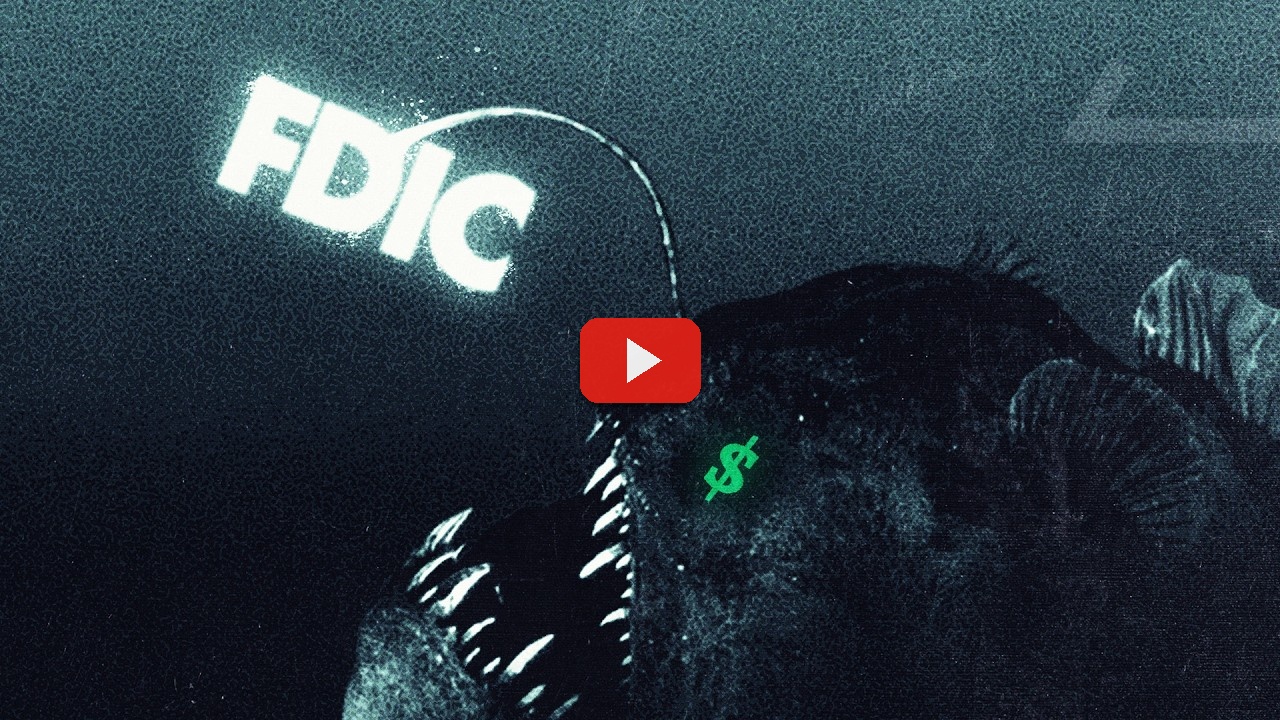
So where was the FDIC in all of this?
This is the part that catches most people off guard: FDIC insurance (and NCUA insurance for credit unions like Elements) only protects you if the bank fails. It doesn’t cover you if the unregulated middleman managing the ledger between you and the bank collapses or simply loses track of your money.
That distinction sounds technical, but it’s everything. The fintech apps marketed FDIC coverage prominently to build trust — and the coverage was real, in the sense that the partner banks were genuinely FDIC-insured. What Yotta’s ads didn’t make clear is that insurance protects against bank failure, not against a third-party tech company mismanaging its books or going bankrupt. Because Yotta’s partner bank itself never failed, federal regulators had no mechanism to step in and make depositors whole. Customers were left to wait on bankruptcy proceedings, class-action lawsuits, and a partial CFPB settlement — years later, some still haven’t recovered everything they’re owed.
In other words: the risk wasn’t the bank. It was everything sitting between you and the bank.
The simple fix: bank somewhere the ledger and the charter live in the same place
The Synapse and Yotta collapse wasn’t a fluke or a one-off bad actor — it’s a structural risk baked into how many fintech apps work. Any time your money passes through a layer that isn’t itself a regulated, chartered institution, you’re trusting that layer to keep its books straight, stay solvent, and have a plan if things go wrong. Most never explain that to their customers.
You can sidestep that risk entirely by saving with an institution where there’s no middleman — where the place tracking your balance is the exact same place that’s federally insured and accountable to regulators.
That’s how credit unions like Elements operate. Your deposits are held directly by the institution that is federally insured by the NCUA — up to $250,000 per member, per ownership category — with no intermediary responsible for tracking your balance.
When you open a High Yield Savings Plus account, your money isn’t passed through outside servers or pooled into someone else’s ledger. It’s held directly with us, an NCUA-insured credit union, with no technology intermediary in between.
And you don’t have to give up the rate to get that peace of mind. Our High Yield Savings Plus account currently earns 3.75% APY1, with new-money deposits over an 8-month promotional period — real, competitive yield, without wondering who’s actually holding your money or how carefully they’re tracking it.
Make Your Savings Work Harder — for a Limited Time
HIGH YIELD SAVINGS PLUS
3.75 % APY1 for 8 months when you bring $15,000 or more in new deposits to ElementsThe bottom line
Fintech savings apps aren’t inherently bad, and plenty of people use them without issue. But “FDIC-insured” on a landing page doesn’t tell you the whole story. Before you move your savings somewhere new, it’s worth asking a simple question: who, exactly, is holding my money — and is there anyone standing between me and them?
With Elements High Yield Savings Plus, the answer is nobody. It’s your money, your credit union, and a rate worth switching for.